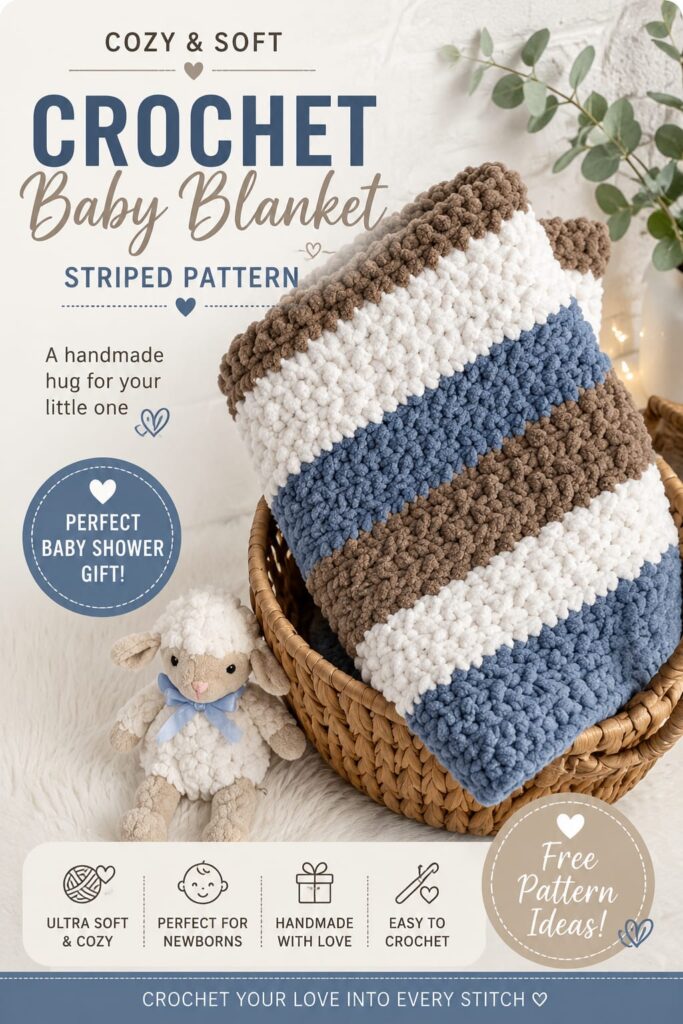
30 Crochet Newborn Blanket Patterns: Easy, Beautiful & Cozy Ideas
If you’ve ever stood in a yarn aisle trying to figure out what to make for a baby shower, you know the feeling: so many options, so little idea where to start. A baby blanket is honestly one of the best projects for this — it’s meaningful, it’s useful, and it doesn’t take a decade to finish.
Below you’ll find 30 crochet newborn blanket ideas, ranging from beginner-friendly basics to a little more texture and detail for when you’re ready to level up. Along the way, I’ll also cover the practical stuff — sizing, yarn choices, stitch options, and a few tips that make the whole process smoother.
Quick Guide to Crochet Newborn Blankets
Here’s the short version before you dive in:
Feature: Beginner-friendly stitches | Recommended Choice: Single crochet, half double crochet, double crochet
Feature: Popular blanket size | Recommended Choice: Around 30 × 36 inches
Feature: Smaller receiving blanket | Recommended Choice: Around 28 × 34 inches
Feature: Yarn | Recommended Choice: Soft, washable, baby-friendly
Feature: Colors | Recommended Choice: Pastels, neutrals, or soft modern tones
Feature: Best projects for beginners | Recommended Choice: Simple repeating stitch patterns
Now, onto the patterns.
- Easy Double Crochet Newborn Blanket
If you’re just starting out, double crochet is about as forgiving as it gets. It works up quickly, doesn’t demand a complicated stitch count, and still produces a fabric that feels nice and substantial. Stick to one color for something clean and classic, or alternate a couple of colors every few rows if you want a bit more visual interest.
Best for: Beginners. Stitch: Double crochet. Style: Simple and classic.
- Simple Crochet Baby Blanket
Not every blanket needs a fancy stitch to look good. A basic repeating pattern in a soft neutral color can look surprisingly polished — and it works for any baby, regardless of gender. Finish it off with a simple single crochet border and you’re done.
- Crochet Granny Square Baby Blanket
Granny squares never really go out of style, and for good reason. You can crochet individual squares in whatever colors you like and stitch them together, or work one continuous granny square from the center out. This is also a great way to use up leftover yarn, since each square doesn’t take much.
Great for: Colorful blankets, scrap yarn projects, beginners.
- Crochet Ripple Baby Blanket
Ripples give a blanket movement and texture without making the construction complicated. Pair white with pastels for a more traditional feel, or go with neutrals for something a little more modern. They’re also easy to resize if you want a smaller lovey or a bigger throw.
- Crochet Shell Stitch Baby Blanket
There’s something inherently soft-looking about shell stitch — it just suits baby blankets. Try cream with blush pink, or white with pale blue, for a delicate finish. Even if you don’t want to shell-stitch the entire blanket, adding a shell border to a plain one instantly dresses it up.
- Crochet Moss Stitch Baby Blanket
Moss stitch gives you texture without the headache. It’s a small repeat, easy to memorize after a row or two, which makes it a nice next step once you’ve mastered basic rows and want something slightly more interesting.
- Neutral Crochet Newborn Blanket
Not sure if it’s a boy or a girl? Neutral is always the safe bet. A few combinations worth trying: cream and beige, white and light gray, sage and ivory, tan and cream, dusty blue and beige. These also tend to blend into almost any nursery, so they age well past the newborn stage too.
- Crochet Baby Boy Blanket
Blue is the obvious choice, but don’t feel boxed in. Consider dusty blue, sage green, navy and cream, gray, beige, mustard, or brown and ivory. A basic stitch paired with the right palette can look far more intentional than something overly fussy.
- Crochet Baby Girl Blanket
Pink is classic, sure, but lavender, peach, dusty rose, sage, and soft gray all work beautifully too. If you want a delicate finish, a scalloped or shell border is an easy way to add that extra touch.
- Crochet Striped Baby Blanket
Stripes are the easiest upgrade for a plain blanket. Two colors gives you something minimal and clean; several colors makes it cheerful and playful. For a more modern twist, vary the width of the stripes instead of repeating them evenly.
- Crochet Heart Baby Blanket
Hearts make for a genuinely sweet handmade gift. You can create them through color changes, a stitch pattern that forms the heart motif, or even small appliqués. A neutral background with a few scattered hearts keeps it simple without losing the charm.
- Crochet Textured Newborn Blanket
Want something that looks more advanced than it actually is? Combine a few basic stitches in alternating rows: single crochet, half double crochet, double crochet, front-loop stitches, bobble or puff stitches. Keep the color scheme simple here — one or two colors — so the texture does the talking.
- Crochet Baby Blanket With a Scalloped Border
Sometimes a border changes everything. A scalloped edge softens the whole look and gives it that classic baby-blanket feel. Match the border yarn to the blanket, or go with a contrasting color for a bit more definition.
- Crochet C2C Baby Blanket
Corner-to-corner is a fun rabbit hole if you like working with blocks and graphs. You can build in hearts, letters, animals, or simple geometric shapes, which makes it a great option when you want something personalized.
- Crochet Checkerboard Baby Blanket
Two soft colors, alternating blocks, instant modern look. Cream and sage, cream and gray, or pink and white all work nicely — nothing too bold, just enough contrast to make the pattern pop.
- Crochet Rainbow Baby Blanket
Rainbows don’t have to mean bright, saturated colors. A muted version — dusty pink, sage, pale yellow, lavender, cream — reads as soft and newborn-appropriate while still bringing some cheer into the nursery.
- Crochet One-Color Baby Blanket
If you lean minimalist, a single-color blanket lets the stitch texture become the whole design. White, cream, oatmeal, sage, and light gray all work well here since the fabric itself does the visual work.
- Crochet Bobble Stitch Baby Blanket
Bobbles add a playful, raised texture — great in rows, or arranged into hearts, stars, or other small motifs. Just keep the surface reasonably flat and avoid any loose add-on pieces if this is meant for an actual newborn to use.
- Crochet Basketweave Baby Blanket
Basketweave gives you that woven, substantial look. It’s a beautiful stitch, but it also creates a denser fabric, so pay attention to your yarn weight — you don’t want the finished blanket to end up heavier than intended.
- Crochet V-Stitch Baby Blanket
The V-stitch is versatile and looks good in one color or several. It’s also a fairly easy repeat, which makes it more approachable than a complicated motif if you’re still building confidence.
- Crochet Flower Baby Blanket
Floral motifs bring in a soft, feminine touch — whether that’s through flower-topped granny squares or a stitch pattern that forms blooms across the whole piece. Pastels are the natural pairing here.
- Crochet Farmhouse Baby Blanket
Think cream, beige, taupe, sage, soft gray — simple, textured, understated. A basic border ties the whole rustic look together without needing anything elaborate.
- Modern Crochet Newborn Blanket
Modern doesn’t mean complicated — usually it’s the opposite. Think horizontal stripes, minimalist color blocking, neutral tones, subtle texture, and clean, simple borders. This kind of blanket tends to suit almost any nursery style, which makes it a safe and versatile gift.
- Crochet Baby Blanket With a Wide Border
One of the easiest ways to customize a plain blanket: just keep adding rounds around the outside. Switch colors between rounds and you’ll get a framed, layered effect without much extra effort.
- Crochet Receiving Blanket
Smaller and more practical than a full-size blanket, a receiving blanket is a great pick if you want something useful — and it’s also a good beginner project since it won’t take forever to finish.
- Crochet Baby Lovey Blanket
A lovey pairs a small blanket with a little character in the center — bears, bunnies, elephants, that sort of thing. If you’re making one for an actual baby, skip small detachable parts and stick to safe, secure construction.
- Crochet Fast Baby Blanket
Need something quick? Go with bulky yarn, a bigger hook, and a simple repeating stitch. Just know that heavier yarn means a heavier finished blanket, so think about how it’ll actually be used before you commit to the weight.
- Crochet Classic White Baby Blanket
There’s a reason white blankets never go out of style — they’re timeless, and they make lovely keepsakes. Add texture or a decorative border to keep it interesting without introducing extra colors. A ribbon can dress it up for gifting, just skip anything loose if it’s headed for a newborn’s crib.
- Crochet Pastel Baby Blanket
Pastels are the go-to for a reason. A few combos to try: pink + cream + lavender, sage + cream + pale yellow, blue + gray + white, peach + ivory + beige. Sticking to three or four related shades keeps the whole thing feeling coordinated instead of scattered.
- Personalized Crochet Newborn Blanket
For something truly one-of-a-kind, build the blanket around the nursery’s color scheme or the family’s preferences. Personalize the palette, the border, the stitch, or add a small motif. If you’re adding a name or any decorative detail, make sure it’s securely attached and safe for its intended use.
What Is the Best Size for a Crochet Newborn Blanket?
Honestly, it depends on what you’re making it for. A smaller receiving blanket usually lands around 28 × 34 inches, while a bigger baby blanket is closer to 30 × 36 inches or more. There’s no single « correct » size — it really comes down to whether you want something for swaddling, cuddling, the stroller, the crib, or just as a keepsake to display. Some published patterns go with roughly 30 inches square, while others are rectangular and larger. Decide on the use first, then pick your dimensions.
What Is the Best Yarn for a Crochet Newborn Blanket?
Softness and easy care matter most here. Look for yarn that’s soft and comfortable against skin, machine washable, durable enough to hold up to regular laundering, marketed for baby projects, and a good match for your stitch and hook size. Cotton and acrylic are the most common choices, and a lot of baby-specific yarns are built with exactly this kind of softness and washability in mind. Whatever you choose, follow the care instructions on the label.
What Crochet Stitch Is Best for a Newborn Blanket?
There’s no one « right » answer — it depends on what you’re going for. Double crochet is quick to work up, great if you want to finish faster. Half double crochet is a bit denser, still comfortable, a nice middle ground. Single crochet is simple and controlled, though it’ll take longer on a larger blanket. Moss stitch gives nice texture from a fairly easy repeat. Granny stitch is a classic, especially good for colorful designs.
How Much Yarn Do You Need for a Newborn Crochet Blanket?
This varies more than people expect, based on finished blanket size, yarn weight, hook size, stitch pattern, your personal tension, and whether you’re adding a border. Because of all these variables, it’s smarter to follow the yarn requirements listed in your specific pattern rather than guessing at a number of skeins. A dense stitch in heavier yarn can eat up noticeably more yarn than an open stitch in something lightweight.
How Long Does It Take to Crochet a Newborn Blanket?
It really depends on the pattern and your own speed. A simple beginner blanket might only take a few hours of actual crocheting, while something more detailed could stretch into days or weeks. As a rough example, some quick newborn blanket patterns list an estimated 3–5 hours to complete, while more involved designs will obviously take longer. If you’re on a deadline, keep the stitch simple and skip complicated color changes.
Tips for Crocheting a Newborn Blanket
Make a gauge swatch first. It takes a few extra minutes but saves you from ending up with a blanket that’s the wrong size.
Choose washable yarn. Baby blankets get washed a lot, so easy-care yarn will save you headaches down the line.
Keep the stitch reasonably tight. Big open gaps might look nice, but they’re not ideal for a cozy, practical blanket.
Measure as you go. Don’t wait until the very end to check your dimensions — it’s much easier to fix things mid-project.
Weave in your ends properly. Loose ends have a way of working themselves free after a few washes, so take the time to secure them well.
Wash it before gifting, if the yarn allows. It’s a nice way to confirm the yarn holds up and softens up nicely.
Are Crochet Blankets Safe for Newborns?
A handmade blanket makes a beautiful gift, but it’s worth being thoughtful about how it’s used. For sleep, always follow current infant sleep safety guidelines rather than treating any blanket — crocheted or otherwise — as loose bedding. Skip small detachable decorations, buttons, beads, or anything that could come loose and pose a choking risk. Where a crochet blanket really shines is for supervised cuddling, stroller outings, or as a receiving blanket — situations where it’s being actively used and watched, not left in a crib overnight.
How to Make a Crochet Newborn Blanket More Special
You don’t need an elaborate pattern to make something memorable. A few easy ways to personalize: the color palette, the border style, the stitch texture, the overall size, the yarn type, or a small geometric or themed motif. Matching the colors to the baby’s nursery is a small touch that goes a long way toward making the gift feel intentional.
Frequently Asked Questions
What’s the easiest crochet newborn blanket pattern?
Double crochet, half double crochet, granny stitch, or moss stitch are all solid starting points — they’re repetitive enough to be easy to follow without much guesswork.
What size should a crochet blanket be for a newborn?
A smaller receiving blanket runs around 28 × 34 inches, while a larger one is typically closer to 30 × 36 inches. The right size really depends on how you plan to use it.
How many chains do I need to start a newborn blanket?
There’s no universal number — it depends on your yarn, hook, stitch pattern, and desired width. Always follow the foundation chain count given in your specific pattern.
What’s the best crochet stitch for a baby blanket?
Double crochet, half double crochet, single crochet, moss stitch, and granny stitch are all popular. It really comes down to the texture and finish you’re after.
What’s the best yarn for a newborn crochet blanket?
Something soft, durable, and easy to wash — cotton and acrylic are the most common picks. Always double-check the manufacturer’s care instructions.
Can a beginner crochet a newborn blanket?
Definitely. It’s actually one of the better beginner projects since it’s smaller than an adult-size blanket. Start with a simple repeating stitch and a manageable size, and you’ll be fine.
Final Thoughts
The best crochet newborn blanket patterns really don’t need to be complicated. A simple stitch, a thoughtful color combo, and a neat border go a long way toward making something that looks — and feels — special. If you’re just starting out, a basic double crochet blanket, granny stitch, or moss stitch is a great place to begin. Once you’re more comfortable, ripples, texture combos, colorwork, and personalized touches are all fun to experiment with. Whatever you choose, pick materials that are easy to care for, and think about how the blanket will actually be used. Whether it’s for your own baby or a gift for someone else’s, the care you put into each stitch is really what makes it meaningful.